Sunday, 14 August 2022

The New, the Near, the Old, the Far

The July event was an evening of two halves - wines from a new winery not far from Freeland and wines from far-away Georgia, where wine production started thousands of years ago.

Our first host was Gavin Carver. 

Gavin is the founder and owner of Freedom of the Press Winery, which is based at Ringwood Farm near Minster Lovell (OX29 0ND).

He presented some delicious English whites, which were examples of the excellent improvement in the quality that English wines have undergone in the last 5 or so years. 

For more details, visit the Freedom of the Press website.

Gavin also hosted two "experimental" wines from the Vindemiate winery, which was established by Tamasine Herriott. 

More details about Tamasine's wines can be found on the Vindemiate website.


Our Second host was Kaha Guliashvili who hails from Georgia. 

His company, GeoNaturals, promotes, imports and sells Georgian wines and he presented some excellent wines made in the traditional way using huge, handmade, clay vessels called qvevri which are buried in the ground while the wine ferments.

For more details on the wines sold by GeoNaturals, visit their website


A short video about the history of Georgian wines can be seen by following this link; https://www.youtube.com/watch?v=NN5ziogyxP0.

Saturday, 28 May 2022

A Night of Mystery

Our May event was a night of mystery. But before we get onto that, we were delighted to welcome some Ukrainian guests to the Wine Club this month and our host, Mark Stuart-Thompson, offered a special Ukrainian welcome.

It was commented upon by several members that numbers were a little down compared to usual. This may have been because May’s event was held a week earlier than normal. I hope some members didn’t turn up on the usual night, only to find the village hall in darkness. For those of us who did attend the theme was The Commonwealth Games, with a twist.

The Commonwealth Games are being held in Birmingham this year and the wines for the night were from Commonwealth countries, of which there are 54. Interestingly, although, the Commonwealth is associated with its link to the British Empire, any country can apply to be a member regardless of its connection with Britain's colonial past. Of course, we did not taste wine from all 54 countries (now there’s a challenge); we had a representative selection of wines from 6 countries.


The twist was that we were offered the wines blind and had to guest their countries of origin. Each table had a selection of a dozen, or so, small cards with an image of a national flag on each. After tasting the wine, we had to hold aloft the flag of the country from which we believed the wine came. Mark was testing our wine tasting expertise; gained from years of attending the wine club.


The first wine, the welcome sparkling wine, was a disaster, at least as far as guessing the country was concerned. It was a fruity, sparkling white which most people assumed was from England. It was in fact from South Africa, a Chardonnay/Pinot Noir blend.


The second did not fare much better. Most thought it was from New Zealand, when this one was, in fact, an English Pinot Blanc. Maybe there was a clue in the cheese - a mature English cheddar.


The next one was a Xynisteri from Cyprus. Since none of us had heard of the grape, it was just as well that guessing the grape was not part of the challenge. There were some interesting thought processes in respect to arriving at its country of origin. One person concluded that the wine would be one that they would like to drink while on holiday beside the Mediterranean. Given we had some clues about countries in the selection of flags on the table, this narrowed the choices to either Malta or Cyprus. Malta was selected. Of course, it turned out to be Cyprus, but the deduction process was sound. On this occasion the cheese was of no use, it being a French garlic and herb Goats' Cheese. 

And so, we moved onto the reds. Most of the members are red wine fans. So, things should have improved. And indeed, they did.


A Pinot Noir, from the renounced Pinot Noir region of Central Otago was the first red. The very earthy nose should have given the grape away. And some people did deduce correctly that New Zealand was the country of origin - well done them! A reserve Swiss Gruyere accompanied this wine.


The full-bodied Shiraz was much more in our line of knowledge and many got Australia as the country of Origin. A nutty Jarlsberg came with this wine. 


Many also got the next red (a Merlot) as coming from South Africa; accompanied by a vintage Gouda.


The last wine was a treat and virtually everyone guessed the country of origin correctly. It was a delicious dessert wine, or more correctly, ice wine from Canada. A Mature British Stilton accompanied the wine.


All-in-all another delightful evening at the Freeland Wine Club, in which there was probably more discussion about the wines than usual!

And finally, before I close, it is time to say a sad good-bye to Louise Kelly, our stalwart Treasurer and Membership Committee Member. Louise has given her invaluable time and expertise to the club for many years, including before it had a formal committee. So, thank you, Louise, from all of us for your dedication and support for the club and your friendly smile. You will be missed. As they say, “Don’t be a Stranger”. We hope you will pop in and join us for a drink (I mean a taste) of wine whenever you are in the area. 


Tuesday, 12 April 2022

The Italian Job

The theme of the evening, given by the title above, gives more than a small hint about the nature of the wines presented to the Freeland Wine Club during our March meeting.

The evening was hosted by wine club member David Lloyd who introduced Matthew Pratt, a wine expert from Moreton Wine Merchants in Moreton-in-Marsh.

Matthew Pratt (right) and David Lloyd

Matt developed an interest in wine after volunteering to help with a wine tasting in a supermarket at which he was working while a student. He was able to sample some of the wine during the tasting and had one of those life changing moments. If wine could taste this good, he needed to know more about them. The rest, as they say, is history.

Matt’s interest and passion for the subject was obvious as he took us on an exploration of the length and breadth of Italy, from Veneto in the north to Sicily in the south. We were able to savour the oenological delights the country has to offer as we joined him on the journey.


The welcome wine was a sparkling white of the Durello grape grown on volcanic hillsides of the Veneto wine region near Verona. The name of the grape refers to the small, firm, late-maturing berries. The Durello grape's natural high acidity and the cool, hillside vineyards produce complex, long lived wines to rival Italy's finest sparklers. Production of Durello Spumante is mostly in the hands of a few small growers, producing traditionally bottle fermented wine with up to 6 years on lees.

The wine offers citrus and gent floral aromas and a fresh palate with crisp green apple and lightly honeyed characters. Serve with antipasti of cold meats, mature cheese and Veneto-style risotto.

The first wine was Gavi Tenuta Santa Seraffa accompanied by a plain French goats cheese roulade.

The Santa Seraffa estate is situated in the Gavi del Comune di Gavi zone which surrounds the town of Gavi. The vines are, on average, 45yrs old and are planted on south-facing slopes of chalky-clay soils with excellent drainage. The name of the estate comes from the hermitage of Santa Seraffa - a destination for pilgrims in the thirteenth century, who were also attracted by the wines produced by the Cistercian monks.

The wine has aromas of flora, citrus and green apple combined with hints of frangipane. The palate has apple and lemon characters and an appealing weight and minerality. The finish is textural and long. Serve with seafood and shellfish.

Wine two was a Caruso and Minini Organic Grillo accompanied by Reblochon

Caruso & Minini are a part of new revival in Sicilian wine. Small wineries have sprung up in the past decade with a strong interest in the potential of the native grapes from Sicily. The estate’s grapes are grown in vineyards in a hilly area east of Marsala at an altitude of 400 meters above sea level.

Pale straw in colour with golden tinges and aromas of lemon, gooseberry, nectarine peel and sage. Bright and crisp on the palate then rounder and more mellow, with a persistent hint of lime and white flowers.

Terrazze della Luna Pinot Grigio Rosato was the third wine and was accompanied by Mozzarella.

The wine is a traditional ramato style of Pinot Grigio rosé that is subjected to a short exposure to the press extract to release the natural dusky bronze colour of ripe Pinot Grigio grapes, giving a pale, coral wine and an elegant and dry rosé. The grapes are sourced from the Vallagarina Valley in Trentino, a zone noted for its fine, crisp Pinot Grigio.

The first red was a Fattoria Le Pupille Morellino di Scansano 2020 accompanied by Grana Pandano, a hard, mature Italian cheese.

Fattoria Le Pupille Morellino di Scansano is a young, soft and fruity red wine dominated by Sangiovese (85%) with Alicante (10%) and Ciliegiolo (5%). It is red with ruby reflections. The aromas have scents of red fruit, blueberries and cherry. On the palate the wine is fresh with a light aromatic persistence and balanced tannins.


Neprica Primitivo was the second red. It is a blend based on Primitivo with Negroamaro and was served
with Pecorino Romana, another hard Italian cheese.

The producer, Tormaresca, consists of two estates in different areas of Puglia, in the heel of Italy.

The wine presents red fruits, black cherry and blackcurrant on the nose. On the palate, the spice of the Negroamaro is complemented by the plum jam flavours of Primitivo, resulting in a soft and well-balanced wine.


The final wine was a Castelforte Amarone della Valpolicella that was served with Gorgonzola.

Castelforte Amarone is made from dried Corvina and Rondinella grapes. A long, slow fermentation and minimum 18 month aging in large oak give this dry, full-bodied red wine a deep garnet red colour, a complex bouquet of cinnamon, cherry jam and walnut and a palate of ripe black cherry fruit with notes of vanilla and coffee on the finish.

Sunday, 6 February 2022

A Bright New Start


As the Freeland Wine Club welcomes a new year of wine experiences it also welcomes its new committee and our first event of the year was an excellent opportunity for the committee to introduce themselves to the members and tell us about some of their favourite wines. 

The new Freeland Wine Club Committee are;


Before the committee introduced their wines, members were welcomed with a delicious Pignoletto Brut; a sparkling white from Italy, which some claim is a superior drink to Prosecco, but it is probably a matter of taste. Nevertheless, if you would like an alternative to Prosecco, you couldn’t do worse than a Pignoletto.

Mark Stuart-Thompson kicked the evening off by introducing a Greek Assyyrtko. He had bought the wine two years ago as he had, at the time, planned to host an evening of wines on an Olympic theme, as he had hoped to visit Japan that year. Of course, the Japanese Games were postponed and although they did eventually go ahead, the very restricted conditions under which they proceeded meant that Mark never did make it to them. Therefore, he took the opportunity at the January event to present this Greek white from the Thymiopoulos vineyard in the Naoussa region of northern Greece. The accompanying cheese was a Greek goats’ cheese, Manouri from Waitrose.


Terry Glossop introduced an English white from the Three Choirs vineyard in Gloucestershire. Terry is on a campaign to convert wine drinkers to drinking British (English and Welsh) wines. There are now over 500 vineyards in the UK and the main grape grown is Pinot Noir; an improvement on Bacchus, which used to be the most popular grape grown in the UK. Going by the wine we tasted on the night the conversion process should not be too difficult; it was generally agreed that the wine presented on the night, called Stone Brook, was excellent. The accompanying cheese was an English Wenseydale from Lidl.


Louise Kelly introduced the first red of the night. Louise has an affinity for antipodean wines, not least because her nephew, Lee Winston, is a wine maker in New Zealand. However, on the night, Louise presented an Italian blend (
MerlotCorvina) from the Pasqua Vigneti e Cantine vineyard in the Venetio region of north-east Italy. The accompanying cheese was a French Comte from Asda.


Bill Pinkerton has a very catholic taste in wine and has travelled widely visiting vineyards an experience which has left him with many memorable anecdotes. He introduced a Bordeaux blend (Merlot, Cabernet Sauvignon, Malbec) from the Chateau Monconseil Gazin vineyard. The accompanying cheese was an English Davidstow mature cheddar, available from most supermarkets.


The only New World wine of the night was presented by Sue Campbell. Sue had an early introduction to wines as her father was a keen wine drinker. But it was when she married that she really got into wines, as her husband is a real wine enthusiast, to the point of knowing the exact weight limit of wines that their car could safely be loaded with when they ventured into France. The wine sue presented was from the Australian Black Stump vineyard. It was a shiraz with a twist, in that it was blended with Durif. The accompanying cheese was a Dutch Vintage Gouda from Lidl.


The chairman, Bob Bradley, explained that he and his wife have many divergent hobbies and interests, but visiting wine cellars around Europe was an interest that they definitely shared. He finished the evening off with a Spanish varietal red (Garnacha) from the Bodegas Borsao vineyard in the Campo de Borgja region in Aragon, in northern Spain. The accompanying cheese was a French goats' cheese from Lidl.


It has to be said that we had another excellent evening, with not only some very fine wines on offer, but with the added delight of hearing different stories of the committee member’s personal adventures with wine and the passion and pleasure they get from experiencing a good wine.

A list of the wines presented on the night can be seen by following this LINK.


Saturday, 11 December 2021

A Time with Friends


As we turn the last few pages in the diary for 2021 and reflect on the year, it is hard to believe it would turn out to be so similar to 2020, if not quite as bad. As far as I can remember (it’s a year ago now and the memory has faded somewhat) we did not have a wine club event in November 2020 (there is no evidence of it on the blog). So, there is one improvement we did manage in 2021.

The November meeting is the final soiree of the year for the Wine Club. It is a time to come together to relax and to chat with friends and have fun, this year in the form of a quiz created by one of the members of the new committee, Mark Stuart-Thomlinson.

In former years, a large table would have been set up at one end of the village hall onto which everyone piled a veritable feast of homemade dishes. The result is a table groaning under the weight of a magnificent buffet. This year, however, the sharing of food was restricted to individual tables, but a fine fare was still had by all.

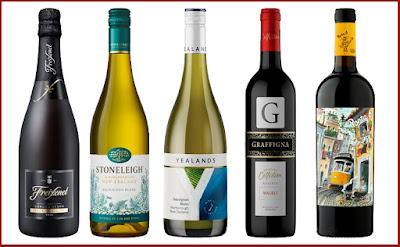
As is the tradition, the Wine Club supplied the wines on the night and as expected the choice was excellent. For those wishing to pop to their local supplier to get wines from the selection provided on the night, they were:


Frexinet Cordon Negro Brut (Cava)

Stoneleigh Sauvignon Blanc

Yealands Sauvignon Blanc

  • Grape Variety: Sauvignon Blanc
  • Alcohol Content: 12.5%
  • Vineyard: Yealands Wines
  • Region: Marlborough
  • Country of Origin: New Zealand

Graffigna Malbec Reserva

Porta 6 (Red)

  • Grape Variety: Tinta Roriz (50%), Castelão (40%), Touriga Nacional (10%)
  • Alcohol Content: 13.5%
  • Vineyard: Vidigal
  • Region: Liboa
  • Country of Origin: Portugal

The label is an original painting by Hauke Vagt, an eccentric German painter, who lives in Lisbon.

The quiz was quite testing. Four rounds with some, naturally, focusing on wine. For those wishing to be reminded of the top 10 wine producing countries they are (as of 2020);

  1. Italy 4,910,000,000 litres
  2. France 4,660,000,000 litres
  3. Spain 4,070,000,000 litres
  4. USA 2,280,000,000 litres
  5. Argentina 1,080,000,000 litres
  6. Australia 1,060,000,000 litres
  7. South Africa 1,040,000,000 litres
  8. Chile 1,030,000,000 litres
  9. Germany 840,000,000 litres
  10. China 660,000,000 litres

And here are the names of the various sizes of wine bottle.

  1. Split 0.187l
  2. Piccolo 0.2l
  3. Half 0.375l
  4. Standard 0.75l (1 bottle)
  5. Magnum 1.5l (2 bottles)
  6. Bouble Magnum 3.0l (4 bottles)
  7. Jeroboam 4.5l (6 bottles)
  8. Imperial / Methuselah 6.0l (8 bottles)
  9. Salmanazar 9.0l (12 bottles)
  10. Balthazar 12l (16 bottles)
  11. Nebuchadnezzar 15l (20 bottles)
  12. Melchior 18l (24 bottles)
  13. Solomon 20l (28 bottles0
  14. Melchizedek 30l (40 bottles)

Alpaca was the answer to one of the questions in the Revue of 2021 round. Poor Geronimo was the alpaca who had to be put down because he tested positive for bovine tuberculosis. You can read his sad story by following this LINK.

Interestingly alpacas have been in the news again recently, but this time their story is a much happier one, so, you may wish to read this BBC Report instead,

During your reflections of 2021, you might ask yourself, “Is there such a thing as a lucky table?” and the answer would appear to be, “Yes, there is such a thing”; at least going by the experience of the November Wine Club event. One table, let’s call it Table 1, not only won the quiz, getting a bottle of splendid wine each, but also won both prizes in the raffle. Well done them! I was delighted for them, not least because I was on the table!

All-in-all it was yet another delightful occasion and a lovely way to spend a cold, dark Friday evening.

I would like to take this opportunity, on behalf of the committee, old and new, to thank everyone for their continued support and attendance. It is often said that it is the members that make a club, this is absolutely true, and that without them the events could not happen. This is less true. The committee could still arrange the bimonthly events and wine tastings, but it has to be said, without the members attending them, they would be rather dull affairs. So do please keep coming, as I am sure you will.

And finally, we wish you a very merry Christmas and a prosperous New Year and look forward to seeing you all in 2022. 

In the meantime, enjoy your wines. 

Why not tell us, in the comments below, which wine(s) you plan to toast the New Year.

Monday, 18 October 2021

A very Warm Welcome

Welcome Back to Members

The Freeland Wine Club’s second night back in the village hall after lock down was a very welcome occasion in more than one way. Firstly, it was a welcome back to the members, to the first formal session for almost two years and we made the most of it, with around 45 members turning up; it seemed that however many tables were put out there were never enough!

Secondly, it was welcome to the new committee! After years of stalwart service, Bruce and Chris have stood down as the lynch-pins of the club which now has a more formal structure and a committee. Thank you both, Chris and Bruce, as the founding fathers of the club, your years of service and dedication have been truly admirable and very much appreciated. And let us not forget Marge and Doreen, the unsung behind-the-scenes heroes without whom the club would not have operated as smoothly as it has.


Welcome Back to Toby

It was also welcome back to Toby Chiles - another stalwart of the club. Toby has hosted 5 wine tastings for the club, including one by Zoom. As is obvious from his numerous visits to the club, Toby is one of our favourite hosts. He has worked for Banbury based wholesaler S H Jones since 2007 and has a Diploma from the Wine and Spirits Education Trust in London. He also works for Wine Unearthed a company that runs wine tasting sessions across the country. Toby hosts a comprehensive 5-hour wine experience (with a three-course lunch) for Wine Unearthed on one Saturday each month. Toby did not let us down and his event for the wine club was yet another creative and fascinating evening learning about the delights of wine.

An Evening of Three Parts

The evening was divided into three tasting rounds, each with three different wines. This was a treat; we normally taste between 5 and 6 in an evening. The wines Toby introduced are listed at the end of the blog.

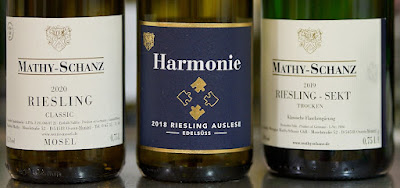
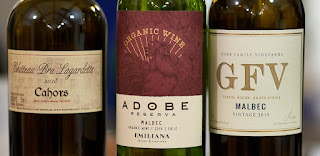
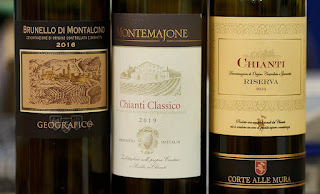
The first wines were all Rieslings and all from the same producer. The aim was to see how versatile grape varieties can be and how they can be used to make different styles of wine. The second collection were all Malbecs from different countries (Chile, France and South Africa). The aim was to see how wines differ when they come from different origins. The third were all Sangiovese from Italy, but with different prices (£6, £14, £37), the price being a proxy for the quality of the wine.

In each round the wines were tasted blind and members encouraged to discuss them. As a result, there was much discussion, debate, banter and laughter, the latter especially as the evening drew on and the wine flowed.

Members were amazed after the first round at how different a varietal wine could be. (I recommend that people experiment with a range of different sauvignon blanc. That is another wine that can be amazingly variable). Most people seemed to think that there was a much smaller difference between the Malbec wines. Malbec does tend to be a consistent grape, with notable differences resulting when wine makers do something creative with it, for example fortifying with brandy or adding coffee. The general conclusion with the Sangiovese was that price is no guide to what you might like in a wine. Indeed, a number of members popped off to Lidl the next day to bought the cheapest of the three. It would be interesting to know if any popped out to buy the most expensive.

Say Cheese

As usual a fine selection of cheeses was provided with the wines. This time we were also treated to charcuterie with some of the wines.

With the Riesling wines:

Le Roulé. A soft French cheese with garlic and herbs.

Reserve Gruyère. From a small Swiss diary that is matured for a minimum of 10 months.

With the Malbec wines

Traditional Air-dried Salami from France

Spicy Spanish Chorizo

Red Leicester (Vintage Red Fox) from Shropshire. Matured for a minimum of 18 months.

With the Sangiovese wines:

Manchego. A full-fat, hard cheese made with sheep's milk matured for a minimum of 9 months, from the La Mancha region of Spain.

Parmigiano Reggiano. A rich, distinctive hard cheese from Italy that is matured for a minimum of 30 months.

And Finally

All in all, the event was yet another most enjoyable evening. Thanks to Toby for being such an excellent host (yet again) and to the members for their thoughtful and enthusiastic involvement.

Finally, the committee would like to thank members for helping to tidy up after the evening, it was very much appreciated.

The Wine List

ROUND 1 – STYLE: German Riesling

Mathy Schanz Riesling Classic (Dry) circa £10 www.weine-mosel.de

Mathy Schanz Auslese (Medium sweet) circa £10 www.weine-mosel.de

Mathy Schanz Sekt (Sparkling) circa £12 www.weine-mosel.de

German Riesling Wines

ROUND 2 ORIGIN: Malbec

Chateau Bur Lagardette Cahors, France, M&S £12.99

Emiliana Adobe, Chile, kwoff.co.uk, ndjohn.co.uk £8.50

Gabb Family Vineyard Malbec, South Africa, Majestic, £11.99


The Malbec Wines

ROUND 3 PRICE: Italian Savgiovese

Geografico Brunello di Montalcino 2016 winbuyers.com clubvini.com £29 - £45

Chianti Classico Villa Cafaggio 2019 Waitrose £10.99 - £13.99

Corte alle Mura Chianti Riserva 2016 Lidl £6

The Savgiovese Wines

Photographs all Copyright Bruce Hamersley 2021

Saturday, 31 July 2021

 At Last!!!!


The Freeland Wine Club,  is able to meet again and we are not talking Zoom here but meet and be with others sharing the love of wine and the enjoyment of each other's company. 

Our last face to face meeting seems an age ago, back in the time that will be called Pre-Pandemic.   January 2020.  As the say, a lot of water has passed under the bridge since then, and water was not on our minds last night at the  meeting.  That said water had been a big part of the day, you see we were aiming to  ease into the meetings by having a group picnic, all bring foods, chairs, blankets, for those reading this outside the UK need to know that the Brits generally picnic very close to, well actually, on the ground, normally on a blanket.  You can buy picnic blankets, made just for that purpose. In any event the weather this week has been rain or about to rain, so not good for alfresco food. On Friday it rained most of the morning  and into the afternoon but by late afternoon the skies cleared and the rain stopped.  So all good, we stayed under cover and enjoyed our picnic foods with friends in the Village Hall. After such a while it was very good to be with Wine Club members, chatting about all sorts with the common interest being wine.  Still keeping a distance and very little shaking of hands  or, heaven forbid, kisses. 

No wine tasting as such, but lots of bubbles to taste, Prosecco in good quntitity, An organic Prosecco was the main wine.  Very good too.  


All of the wines came from that famous wine cellar in Oxford, Aldi, sadly the Jura Cremant is currently unavailable but when there is a star buy. 


Not everyone got to taste the red of the night, it was felt that red would not be wanted, how wrong can you be?  The Sangiovese was very popular. the Italian grape making the journey to Chili more than well and producing a fine red wine. (Aldi £6.49)


The Prosecco was  organic, dry and very well received as well.  (Aldi £7.49)


If the photographer failed to photograph you then he is sorry for that but if your picture is here he hopes you approve.